

boeken. gelezen. goedgekeurd.
Jacob Jordaens (1593 - 1678) - Paintings / Tapestries
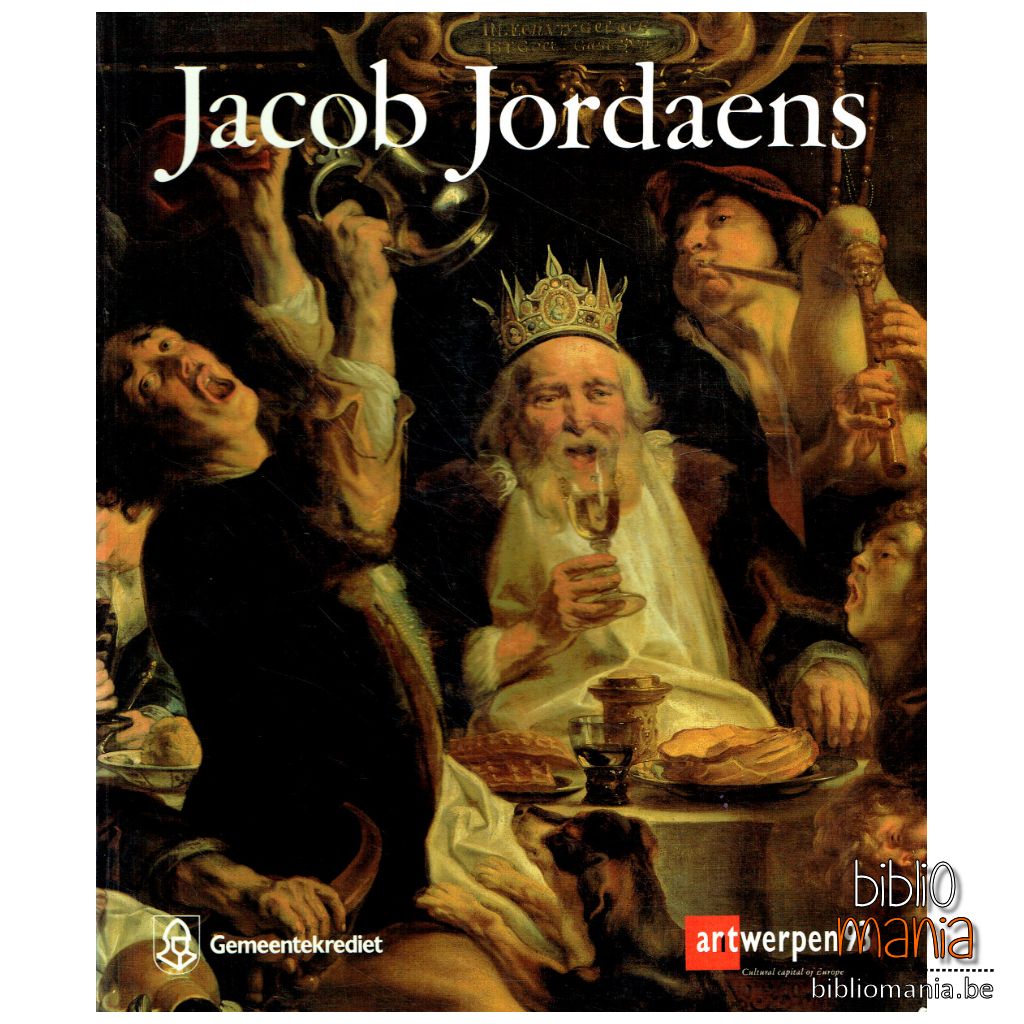

Paperback / 310 bladzijden / uitgave 1993
taal (talen) : engels
uitgever : Gemeentekrediet van België
ISBN : 9050661173
EAN : 9789050661171
afmetingen : 296 (h) x 245 (b) x 27 (dk) mm
gewicht : 2060 gram
BESCHIKBAAR
Alle prijzen zijn BTW inbegrepen
The series OF historical exhibitions that have been organised as part of Antwerp’s selection as Cultural Capital of Europe commences with a retrospective exhibition devoted to the art of Jacob Jordaens.
Jordaens constitutes one of the principal reasons why our Municipality declared its candidacy for 1993. This year we are celebrating the 400th anniversary of the birth of this great master of the Baroque, the age in which our city was one of Europe’s foremost cultural centres. The sphere of Antwerp’s influence was immense, thanks to the artists who lived here. Their productivity, and the other artists they attracted, were of tremendous cultural consequence.
Jacob Jordaens was born in Hoogstraat on 19 May 1593. At the age of fourteen he already began studying with Adam van Noort. As sometimes happens in the world of painters, in 1616 he married his teacher’s eldest daughter, Catharina.
The master has always been somewhat overshadowed by his contemporaries Rubens and Van Dyck. Yet he is no less worthy, especially since he was a far more faithful to his native city than they: while the others chose to go abroad, where they were inevitably marked by the great Italian masters, Jordaens remained loyal to Antwerp. Indeed he was veritably rooted to his surroundings and seldom left the Scheldt-city. With extraordinary panache his brush captured human warmth, joie de vivre and universal values. Notwithstanding the evident affinity between their art and the artistic ideals they shared, Jordaens was doubtless the most independent figure in Rubens’s circle. But while Rubens — with his aristocratic nature, courtly upbringing, his intellectual depth and refined character — managed to distance himself from the others with his work, despite his prodigious talent Jordaens remained the common artist, the artist of the people, one of many who lived in Antwerp in the seventeenth century. Nevertheless, Jordaens’s art stands head and shoulders above that of most of his contemporaries. His superior talent was recognised as such from an early age.
On the occasion of his 400th birthday, we have brought back to Antwerp some of Jordaens’s works that have been scattered over the world in the intervening centuries. The exhibition seeks to impart a subtle impression of his oeuvre, emphasising the quality and breadth of this gifted Flemish master.
I know many will want to take advantage of the opportunity to become better acquainted with this typically Baroque painter, and that the exhibition will be well received — not least by Jordaens’s fellow citizens. His art is filled with the people of Antwerp, after all, many of whom will recognise themselves in it.
Jordaens constitutes one of the principal reasons why our Municipality declared its candidacy for 1993. This year we are celebrating the 400th anniversary of the birth of this great master of the Baroque, the age in which our city was one of Europe’s foremost cultural centres. The sphere of Antwerp’s influence was immense, thanks to the artists who lived here. Their productivity, and the other artists they attracted, were of tremendous cultural consequence.
Jacob Jordaens was born in Hoogstraat on 19 May 1593. At the age of fourteen he already began studying with Adam van Noort. As sometimes happens in the world of painters, in 1616 he married his teacher’s eldest daughter, Catharina.
The master has always been somewhat overshadowed by his contemporaries Rubens and Van Dyck. Yet he is no less worthy, especially since he was a far more faithful to his native city than they: while the others chose to go abroad, where they were inevitably marked by the great Italian masters, Jordaens remained loyal to Antwerp. Indeed he was veritably rooted to his surroundings and seldom left the Scheldt-city. With extraordinary panache his brush captured human warmth, joie de vivre and universal values. Notwithstanding the evident affinity between their art and the artistic ideals they shared, Jordaens was doubtless the most independent figure in Rubens’s circle. But while Rubens — with his aristocratic nature, courtly upbringing, his intellectual depth and refined character — managed to distance himself from the others with his work, despite his prodigious talent Jordaens remained the common artist, the artist of the people, one of many who lived in Antwerp in the seventeenth century. Nevertheless, Jordaens’s art stands head and shoulders above that of most of his contemporaries. His superior talent was recognised as such from an early age.
On the occasion of his 400th birthday, we have brought back to Antwerp some of Jordaens’s works that have been scattered over the world in the intervening centuries. The exhibition seeks to impart a subtle impression of his oeuvre, emphasising the quality and breadth of this gifted Flemish master.
I know many will want to take advantage of the opportunity to become better acquainted with this typically Baroque painter, and that the exhibition will be well received — not least by Jordaens’s fellow citizens. His art is filled with the people of Antwerp, after all, many of whom will recognise themselves in it.

gelijkaardige artikelen zoeken per categorie
gelijkaardige artikelen zoeken per onderwerp: